
When you find yourself at a crossroads in life, what method will you use to guide yourself?
Some people are accustomed to drawing a tarot card and finding answers through the imagery and their intuition; others have begun paying attention to numbers.The characters, the time—even the birdsong outside the window—these are all signals for initiating the Plum Blossom Divination method. Though these two tools are often compared, they fundamentally represent two entirely different worldviews.
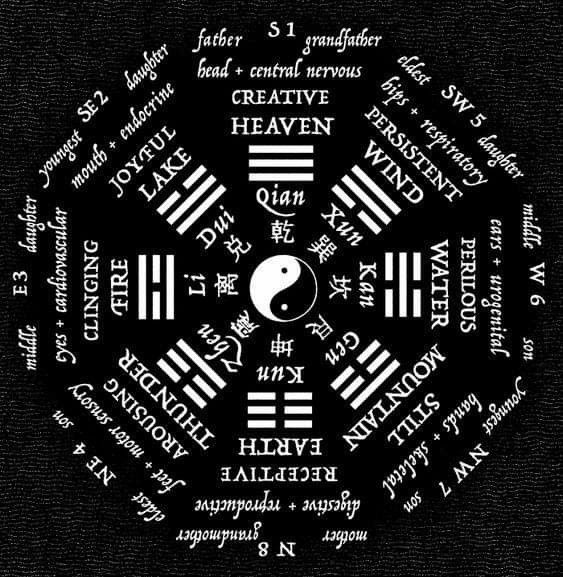
The Plum Blossom I Ching: More than just divination—it’s also a form of “weather forecasting.”
The Plum Blossom I Ching originated in the Song Dynasty and was founded by the scholar Shao Yong. Its core idea can be summarized in three characters:Image, Number, Principle.
· ElephantEverything in the world has an outward appearance. A bird’s song, a gust of wind, a number, or even the time you glimpse when you look up—all these can serve as the starting point for a “gua image.”
· NumberConvert the appearance into numbers. For example, if you’re currently looking at the time on your phone and it’s 14:35, then 1, 4, 3, and 5 are the numbers used to generate the hexagram.
· reasonBased on the numbers, we deduce the Eight Trigrams, the Five Elements, and the relationships of generation and destruction between them. Then, by integrating this with the specific question you’ve asked, we arrive at a logically sound conclusion.
In other words, the Plum Blossom Eastern Divination does not rely on any physical props (no cards, no coins)—it depends solely on...Your current space time informationEverything can serve as a hexagram; everything can be reduced to numbers.
Its essence is not “fortune-telling,” but rather a set of...A probabilistic inference system based on the fluctuations of celestial and terrestrial energiesJust as meteorologists look at cloud patterns to predict whether it will rain, the Plum Blossom Divination Method uses the changes in the numerical symbols of “heavenly timing, earthly advantages, and human harmony” to help you gauge the general direction of a particular event.
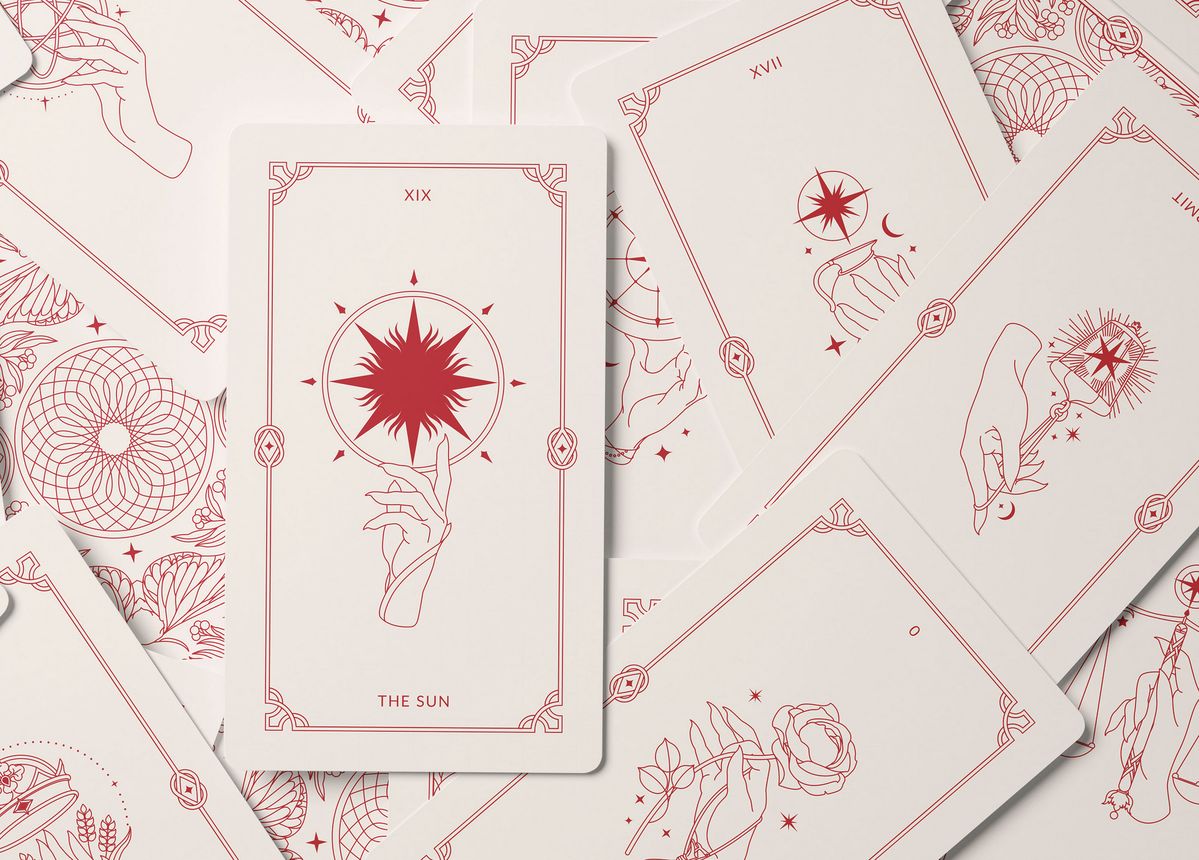
Tarot Cards: A Mirror of Your Inner Self
Tarot cards, by contrast, are entirely different. They rely on a fixed set of 78 cards, each one embodying universal psychological archetypes shared by all humanity. If you draw the "Death" card, it doesn't mean you're actually going to die—it simply suggests an ending and a new beginning. Similarly, drawing the "Lovers" card doesn't necessarily signify romantic love; it could instead represent choice and union.
The interpretation of Tarot is, at its core, a journey.A Dialogue with the SubconsciousThe cards you draw are a reflection of your inner state. That’s why Tarot is perfect for exploring emotions, relationships, and inner conflicts—it helps you transform vague feelings into tangible images.
But this also means that the answers from tarot readings heavily depend on the reader’s intuition and experience. The same card, interpreted by different people in different states of mind, can yield vastly different meanings.
The key difference: Are you looking in the mirror, or are you watching the weather forecast?
It can be explained clearly with just one metaphor:
· The tarot is a mirror.It reflects your inner world at this very moment—your fears, your desires, your contradictions. It answers the question: “What is my current state?”
· The Plum Blossom I Ching hexagram is a weather map.It depicts the world beyond you—the current wind direction, the season, and the temperature. It answers the question: “Is this particular moment the right time for me to do something?”
So, when you’re feeling confused and unsure of what you truly want, the Tarot can help you gain clarity about yourself. But when you already know what you want—yet you’re uncertain whether “now is the right time” or “whether to go left or right”—the Plum Blossom Divination Method will offer you a clearer set of guidelines.
Why do ordinary people need to understand the Plum Blossom Divination?
That’s because we’re making decisions every single day—small ones, like “Should I take the initiative today and talk to my supervisor about a raise?” or big ones, like “Should we launch this project now?” Often, our indecision isn’t due to lack of effort; rather, it’s because we can’t clearly see the “right timing.”
Just as farmers don’t sow seeds in winter, and fishermen don’t set out to sea during storms, the Meihua Yi Gua helps you determine the “season” you’re in right now—should you attack or defend? Should you take the initiative and strive for victory, or patiently wait for the right moment?
This isn’t superstition—it’s the wisdom of ancient people, accumulated over thousands of years through their observations of heaven and earth and their synthesis of underlying patterns. It doesn’t offer you a simple “yes or no” answer; rather, like a calm strategist, it tells you: Where does the current momentum lie? Where do you stand? And what’s the next step you should take?
Let the Plum Blossom Eastern Divination enter your daily life.
On the OrientalOne website, we combine the ancient wisdom of the Plum Blossom I Ching hexagrams with AI, enabling you to obtain a predictive reference—based on favorable timing, advantageous location, and harmonious relationships—without needing to memorize the entire Book of Changes when making important decisions.
If you’ve never been exposed to Plum Blossom I Ching, why not think of it as a brand-new perspective—a tool that helps you “see clearly the timing of heaven.” It doesn’t conflict with Tarot; on the contrary, the two can complement each other: When your emotions are in turmoil, Tarot helps you gain insight into your inner world; when you need to assess external timing, Plum Blossom I Ching helps you discern the right course of action.
After all, true decision-making power has never been about seeking answers externally—it stems instead from a deep understanding of oneself, as well as reverence for and alignment with the right timing.
Comments
No comments yet, be the first to comment!